
Paint & Blast in Australia
Manufactured in Townsville & Mount Isa. Custom-built ventilation doors designed for tough mining environments, helping your site maintain reliable airflow, safety and day-to-day efficiency.
Protective Coatings Built to Last
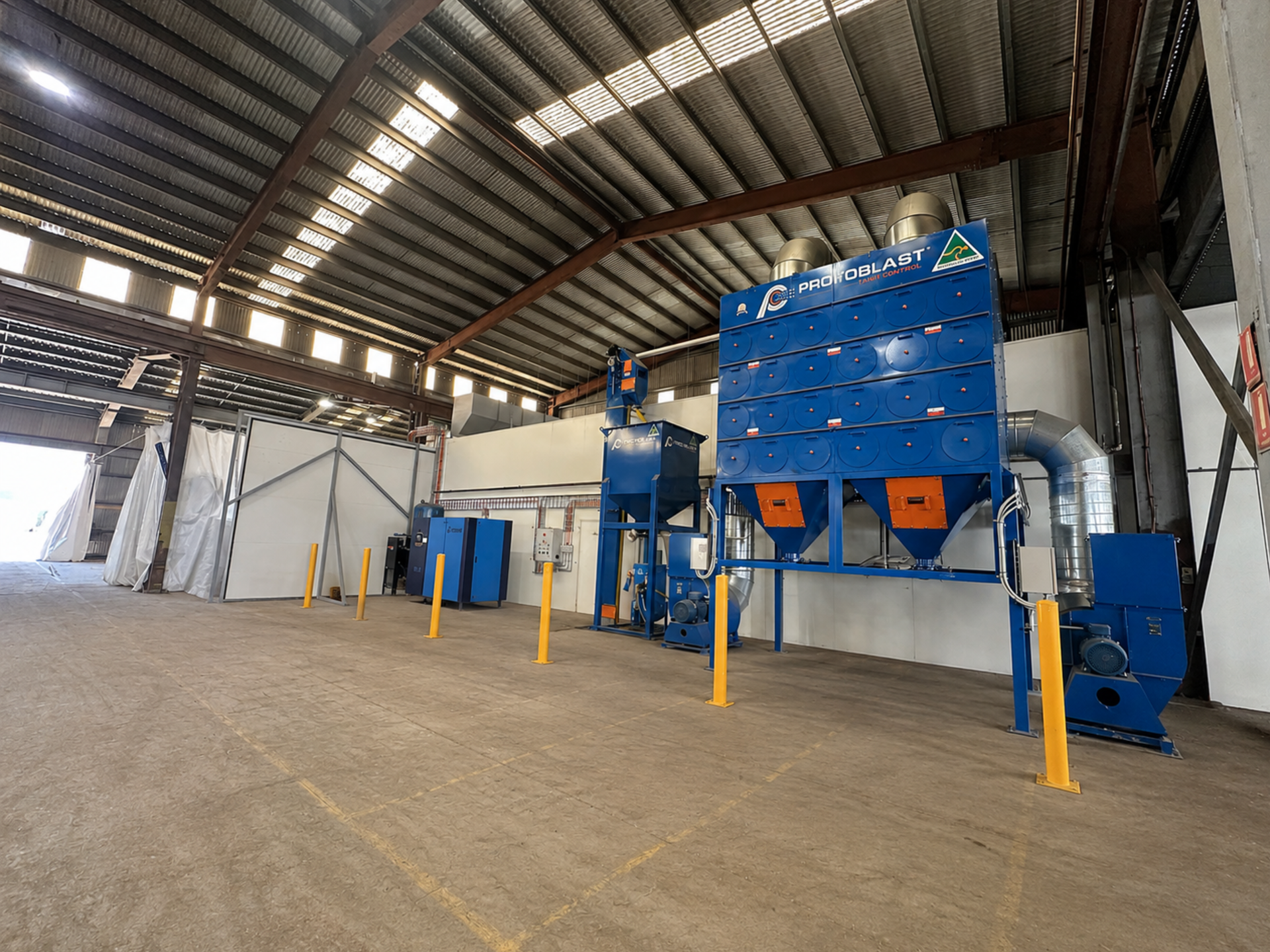
Steel exposed to harsh site conditions doesn't stay in good shape for long without the right protection. Vent Doors Australia provides professional paint and blast coating services for mining and industrial equipment across Australia, North Queensland and Townsville and beyond, helping protect steel components from corrosion and harsh mining environments.
Every project is approached with attention to detail, ensuring results that perform:
- Thorough blast cleaning removes rust, scale and old coatings to create a properly bonded surface
- Coating systems are matched to each site's specific environmental conditions
- Corrosion-resistant and abrasive-resistant heavy-duty coatings
- Mine-specific coatings can meet your requirements for durable finishes
We focus on strong preparation, quality materials and long-lasting results, helping protect your assets and reduce the need for costly rework. Call 0447 606 904 to talk with us about your requirements.
Built to Handle the Conditions You Work In
A coating is only as good as the preparation behind it, which is why our team pays close attention to every stage of the process rather than treating it as a quick finish. Conditions like moisture, heat, chemical exposure and abrasive dust are all factored in before deciding on the right approach for your steel. This attention to detail helps deliver a finish that holds up under real working conditions, not just on the day it's applied.
If your steel is due for some proper protection, it's worth getting in touch to talk through what's involved.
Australia-Wide Service
In-House Fabrication
Mount Isa Based
Get in Touch
Got steel that needs protecting? Fill in the form below and the team will be in touch to talk through your project.
Contact Us
Thank you for contacting Vent Doors Australia.
We will get back to you as soon as possible.
Oops, there was an error sending your message.
Please try again later.
FAQ
How often does steel need to be re-blasted and repainted in mining environments?
This depends heavily on the specific conditions the steel is exposed to, including humidity, chemical exposure, vibration, and general wear from daily operations. In high-exposure mining and industrial settings, coatings can start to break down faster than in milder environments, sometimes requiring attention within just a few years. Regular inspection is the best way to catch early signs of corrosion or coating failure before they become bigger problems. Keeping an eye on high-wear areas in particular can help extend the life of the coating overall.
What's the difference between blasting and just repainting over old paint?
Painting directly over old, worn coatings without proper blasting often leads to poor adhesion, meaning the new paint is more likely to peel, bubble, or fail prematurely. Blasting removes rust, old paint, and surface contaminants down to bare metal, giving the new coating a clean, stable surface to bond to. This step is particularly important in industrial settings where steel is regularly exposed to moisture, dust, and mechanical stress. Skipping it might save time upfront but usually costs more in the long run through earlier coating failure.
Can coatings be matched to specific environmental conditions, like high heat or chemical exposure?
Yes, different coating systems are formulated to handle different challenges, whether that's extreme heat, constant moisture, chemical splash, or abrasive dust. Choosing the right system for the specific environment is one of the most important factors in how long a coating will last. A coating designed for general use won't necessarily hold up the same way in a harsher industrial setting. Matching the coating to the actual conditions on site makes a significant difference to long-term performance.